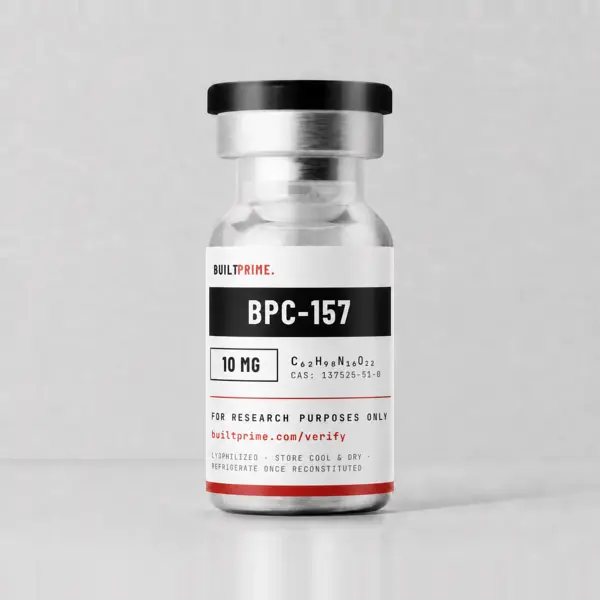
A synthetic pentadecapeptide derived from a protective protein found in human gastric juice. One of the most-researched peptides in animal models for tissue repair, gut healing, and systemic recovery.
Last updated: October 2026 · Editorial Policy
BPC-157 (Body Protection Compound-157) is a 15-amino acid synthetic peptide derived from a larger protective protein found naturally in human gastric juice. It was first isolated from the stomach lining, where it plays a role in mucosal protection and gut repair.[2]
In research settings, BPC-157 has demonstrated tissue-healing properties across multiple systems in animal studies[1] – tendons, ligaments, muscles, the GI tract, and even the nervous system. It is one of the few peptides studied for both injectable (subcutaneous) and oral administration.
Head to Head
BPC-157 vs TB-500
BPC-157 operates through several interconnected repair pathways:
BPC-157 can be administered subcutaneously (near the injury site for localized effect) or orally (for gut-related applications). Dosing reflects commonly reported research protocols:
| Protocol | Dose | Frequency | Notes |
|---|---|---|---|
| Standard SubQ | 250–500 mcg | 1–2x daily | Inject near injury site when possible |
| Systemic SubQ | 500 mcg | Once daily | Abdominal SubQ for general healing |
| Oral (gut focus) | 250–500 mcg | 1–2x daily | On empty stomach for GI applications |
For localized injuries, inject as close to the site as practical. Oral dosing is primarily used for gut-related protocols. Typical research cycles run 4–12 weeks. BPC-157 is frequently stacked with TB-500 for enhanced systemic recovery.
Supplies: peptide vial, bacteriostatic water, insulin syringes (29–31 gauge), alcohol swabs.
Concentration: 10 mg in 2 mL = 5,000 mcg/mL
Typical research cycle: 4–12 weeks. Results generally reported within 1–2 weeks.