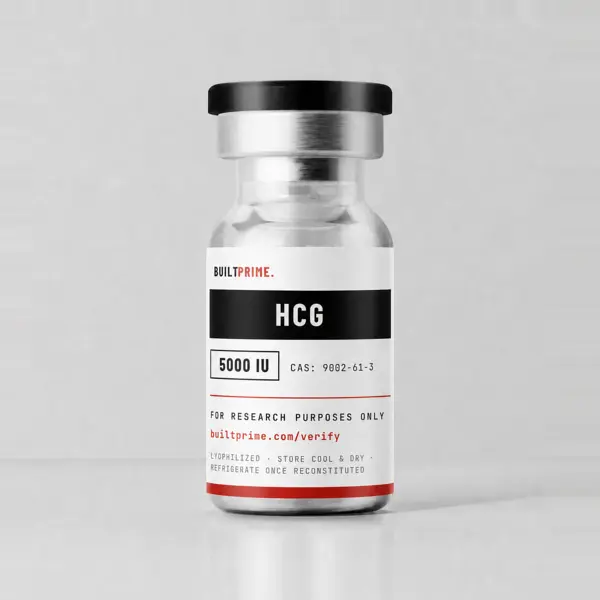
Glycoprotein hormone for hormonal support, post-cycle therapy (PCT), fertility, and testicular function research.
Last updated: October 2026 · Editorial Policy
Human Chorionic Gonadotropin (HCG) is a naturally occurring glycoprotein hormone produced by the placenta during pregnancy. It consists of an alpha subunit shared with LH, FSH, and TSH, and a unique beta subunit that gives it its specific biological activity. HCG mimics luteinizing hormone (LH) by binding to the same receptors in the gonads.
In research and clinical settings, HCG is widely used for its ability to stimulate gonadal function. In males, it directly stimulates Leydig cells to produce testosterone, making it valuable for hormonal support during and after exogenous hormone protocols. In females, it is used to trigger ovulation in fertility treatments.
HCG binds to luteinizing hormone/choriogonadotropin receptors (LHCGR) on Leydig cells in the testes and theca cells in the ovaries. This binding activates cAMP-mediated signaling cascades that stimulate steroidogenesis – the production of testosterone in males and progesterone in females.
By mimicking LH, HCG maintains intratesticular testosterone (ITT) production even when the hypothalamic-pituitary-gonadal (HPG) axis is suppressed by exogenous hormones. This preserves testicular volume, spermatogenesis, and Leydig cell sensitivity during TRT or anabolic protocols.
In female subjects, HCG triggers the final maturation and release of oocytes from mature follicles, mimicking the natural LH surge that precedes ovulation. This mechanism is the basis for its use in assisted reproductive technology (ART) protocols.
HCG-stimulated testosterone production leads to downstream aromatization to estradiol, which is important for bone density, lipid metabolism, and cognitive function. It also supports pregnenolone and DHEA production through stimulation of the steroidogenic pathway.
| Protocol | Dose | Route | Frequency | Duration |
|---|---|---|---|---|
| On-Cycle Support | 250–500 IU | SubQ | 2–3x weekly | Duration of cycle |
| PCT Blast | 1000–1500 IU | IM / SubQ | EOD | 10–14 days |
| TRT Adjunct | 500 IU | SubQ | 2x weekly | Ongoing with TRT |
| Fertility Protocol | 1000–2000 IU | IM / SubQ | 2–3x weekly | 3–6 months |
All protocols are for research reference only. Consult a qualified medical professional before use.
For research use only. Third-party tested. COA available on request.
Supplies: peptide vial, bacteriostatic water, insulin syringes (29–31 gauge), alcohol swabs.
Concentration: 5,000 IU in 2 mL = 2,500 IU/mL
Typical research cycle: As directed. Results generally reported within 1–2 weeks.