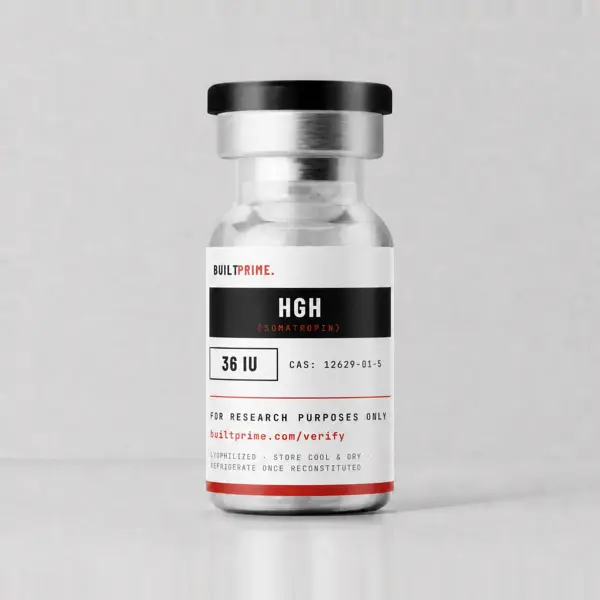
A 191-amino acid recombinant protein identical to endogenous somatotropin. The gold standard for direct growth hormone replacement in research settings.
Last updated: October 2026 · Editorial Policy
Human Growth Hormone (HGH), also called somatotropin, is a 191-amino acid protein produced by the anterior pituitary gland. It is the primary hormone responsible for linear growth, cell regeneration, and tissue repair throughout the body.
Recombinant HGH (rHGH) is a lab-synthesized version structurally identical to the body’s own GH. Unlike secretagogues that stimulate the pituitary to produce more GH, exogenous HGH delivers the hormone directly – bypassing the hypothalamic-pituitary axis entirely.
HGH acts through both direct and indirect pathways:
Recombinant HGH is administered via subcutaneous injection, typically once daily. Dosing is measured in international units (IU):
| Protocol | Dose | Frequency | Notes |
|---|---|---|---|
| Anti-aging | 1–2 IU | Once daily | Morning or pre-bed; long-term use |
| Body recomp | 2–4 IU | Once daily | Morning fasted; 5 on / 2 off common |
| Recovery | 4–6 IU | Split AM/PM | Advanced; monitor blood glucose |
Start low and titrate up over 2–4 weeks to assess tolerance. Monitor fasting blood glucose and IGF-1 levels. Common protocols cycle 5 days on / 2 days off or run continuously for 3–6 months.
This compound typically comes pre-mixed and ready to inject. Use an insulin syringe (29–31 gauge) for subcutaneous administration.
Typical protocol: 3–6 months. Results generally reported within 4–6 weeks.