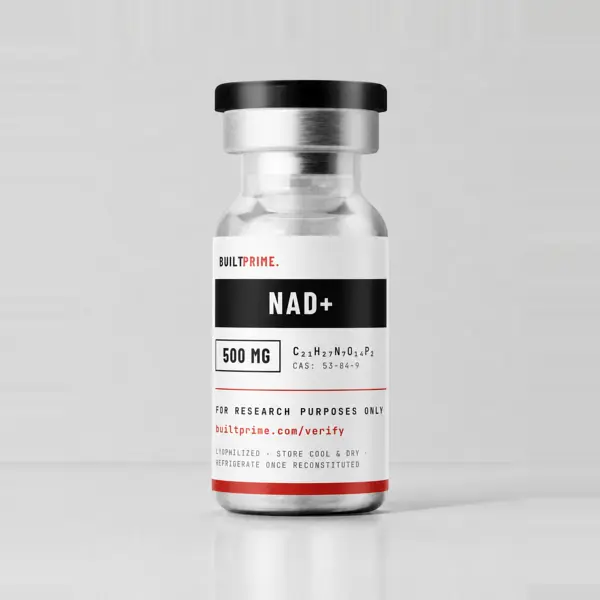
Nicotinamide Adenine Dinucleotide for cellular energy production, DNA repair, sirtuin activation, and metabolic anti-aging research.
Last updated: October 2026 · Editorial Policy
NAD+ (Nicotinamide Adenine Dinucleotide) is a coenzyme found in every living cell. It plays a central role in over 500 enzymatic reactions, including energy metabolism, DNA repair, gene expression regulation, and cellular signaling. NAD+ is not a peptide but is commonly included in peptide research protocols due to its foundational role in cellular health.
NAD+ levels decline significantly with age – by roughly 50% between ages 40 and 60. This decline is now considered one of the hallmarks of aging and is linked to metabolic dysfunction, neurodegeneration, and reduced cellular repair capacity. Restoring NAD+ levels is a primary target in longevity research.
NAD+ is the essential co-substrate for sirtuins (SIRT1–7), a family of deacetylase enzymes that regulate aging, inflammation, stress resistance, and metabolic efficiency. Without adequate NAD+, sirtuin activity drops and cellular maintenance pathways slow down.
Poly(ADP-ribose) polymerases (PARPs) consume NAD+ to repair DNA strand breaks. As DNA damage accumulates with age, PARP activity increases, depleting the NAD+ pool and creating a vicious cycle of declining repair capacity.
NAD+ is critical for the electron transport chain in mitochondria, directly supporting ATP production. Declining NAD+ levels impair mitochondrial function, contributing to the energy deficit observed in aged tissues.
| Protocol | Dose | Frequency | Duration |
|---|---|---|---|
| SubQ Maintenance | 100–200mg | 1x daily | 30–90 days |
| IV Infusion | 250–500mg | 1–2x weekly | 4–8 weeks |
| Intensive Loading | 500mg | 1x daily (IV) | 5–10 days |
Subcutaneous NAD+ injections are the most practical route for ongoing research protocols. IV infusions deliver higher bioavailability but require longer administration times (1–4 hours per session).
This compound typically comes pre-mixed and ready to inject. Use an insulin syringe (29–31 gauge) for subcutaneous administration.
Typical protocol: 4–8 weeks. Results generally reported within 1–2 weeks.