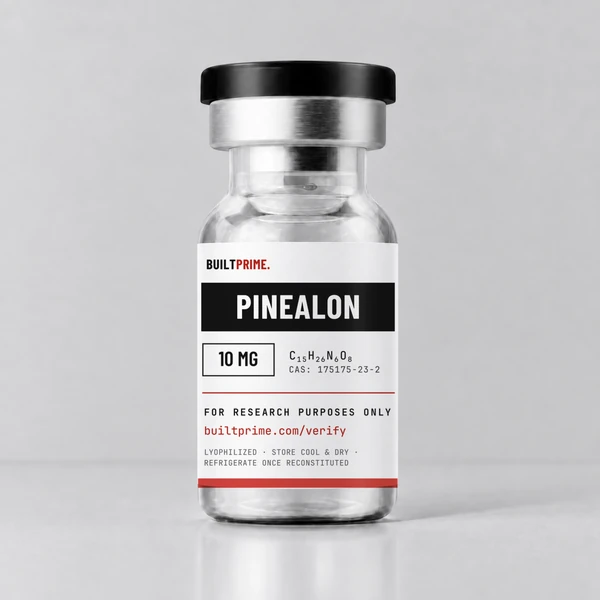
Short bioregulatory peptide (Glu-Asp-Arg) for neuroprotection, pineal gland support, and sleep cycle regulation in research models.
Last updated: October 2026 · Editorial Policy
Pinealon is a synthetic tripeptide with the amino acid sequence Glu-Asp-Arg (EDR). It belongs to the Khavinson peptide bioregulator family, originally developed at the St. Petersburg Institute of Bioregulation and Gerontology. Pinealon was designed to target brain and central nervous system tissue, particularly the pineal gland.
As a bioregulatory peptide, Pinealon is theorized to interact with DNA at the gene level, potentially influencing the expression of proteins involved in neuroprotection and circadian rhythm regulation. Its small size (just three amino acids) allows it to cross the blood-brain barrier in research models.
Pinealon is believed to interact directly with DNA sequences, modulating the transcription of genes involved in neuronal survival, antioxidant defense, and melatonin synthesis. This epigenetic mechanism distinguishes it from traditional neuroprotective agents.
Research suggests Pinealon may help maintain pineal gland function by supporting melatonin production pathways. The pineal gland’s calcification and functional decline with age is a key area of interest for this peptide.
In cell culture studies, Pinealon has demonstrated the ability to reduce reactive oxygen species (ROS) accumulation and inhibit apoptotic pathways in neuronal tissue, suggesting a direct cytoprotective role.
| Protocol | Dose | Frequency | Duration |
|---|---|---|---|
| Neuroprotection | 5–10mg | 1x daily | 20–30 days |
| Sleep Support | 5–10mg | 1x daily (PM) | 30 days |
| Cognitive Enhancement | 10mg | 1–2x daily | 20–30 days |
Bioregulatory peptides are typically administered in cycles of 10–30 days, followed by a rest period of equal length before repeating.
Supplies: peptide vial, bacteriostatic water, insulin syringes (29–31 gauge), alcohol swabs.
Concentration: 10 mg in 2 mL = 5,000 mcg/mL
Typical research cycle: 2–4 weeks. Results generally reported within 1–2 weeks.