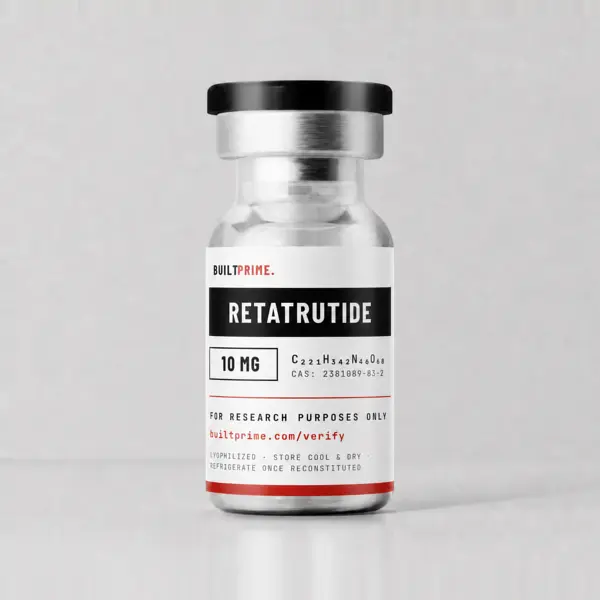
A next-generation triple receptor agonist targeting GIP, GLP-1, and glucagon pathways simultaneously for unprecedented metabolic research outcomes.
Last updated: October 2026 · Editorial Policy
Retatrutide (LY3437943) is Eli Lilly's investigational triple hormone receptor agonist. While semaglutide targets one receptor (GLP-1) and tirzepatide targets two (GIP + GLP-1), retatrutide activates all three: GIP, GLP-1, and glucagon receptors. This triple mechanism represents the next frontier in incretin-based metabolic research.
Phase 2 trial data published in the New England Journal of Medicine showed mean body weight reductions of up to 24.2% at 48 weeks, with some participants losing over 30% of their starting weight. These results surpass any other pharmacological intervention studied to date.
Retatrutide builds on the dual-agonist foundation of tirzepatide and adds glucagon receptor activation:
GLP-1 pathway: Reduces appetite, slows gastric emptying, and improves glucose-dependent insulin secretion. This shared mechanism with semaglutide and tirzepatide provides the well-established incretin effects.
GIP pathway: Enhances insulin sensitivity, supports fat metabolism, and may improve tolerability compared to pure GLP-1 agonists.
Glucagon pathway: This is what makes retatrutide unique. Glucagon receptor activation increases energy expenditure by stimulating hepatic lipid oxidation (fat burning in the liver), promotes thermogenesis, and reduces liver fat content. While glucagon traditionally raises blood sugar, the concurrent GLP-1 and GIP agonism counterbalance this effect, maintaining glycemic control.
The net result is a compound that reduces caloric intake (appetite suppression) while simultaneously increasing caloric expenditure (thermogenesis) — attacking energy balance from both sides.
Obesity research: The magnitude of weight loss observed in Phase 2 trials has been described as approaching bariatric surgery outcomes. Phase 3 trials (TRIUMPH program) are evaluating these effects at scale.
Metabolic liver disease: The glucagon component's effect on hepatic fat oxidation makes retatrutide particularly interesting for NASH/NAFLD research. Early data showed dramatic reductions in liver fat content.
Energy expenditure: Unlike pure GLP-1 agonists, which primarily reduce energy intake, retatrutide's glucagon component may increase resting metabolic rate, potentially reducing the metabolic adaptation that slows weight loss over time.
Retatrutide follows a more gradual escalation schedule due to its triple-agonist potency:
| Weeks | Dose | Frequency | Notes |
|---|---|---|---|
| 1 – 4 | 1 mg | Once weekly | Initiation dose |
| 5 – 8 | 2 mg | Once weekly | First escalation |
| 9 – 12 | 4 mg | Once weekly | Second escalation |
| 13 – 16 | 8 mg | Once weekly | Third escalation |
| 17+ | 12 mg | Once weekly | Maintenance dose |
Inject subcutaneously in the abdomen, thigh, or upper arm. Rotate injection sites. The escalation schedule may be extended if GI side effects are significant at any step. As an investigational compound, dosing protocols are based on clinical trial data and may evolve.
This compound typically comes pre-mixed and ready to inject. Use an insulin syringe (29–31 gauge) for subcutaneous administration.
Typical protocol: Ongoing. Results generally reported within 4–12 weeks.