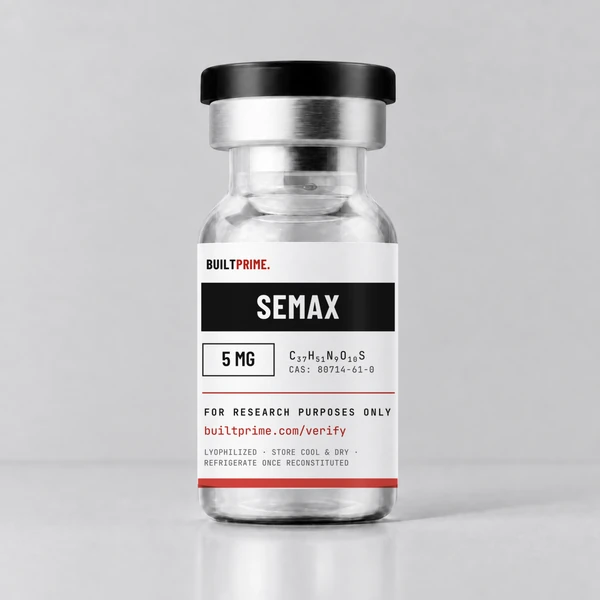
A synthetic analog of ACTH(4–10) originally developed in Russia, researched for cognitive enhancement, neuroprotection, and BDNF upregulation.
Last updated: October 2026 · Editorial Policy
Semax is a synthetic heptapeptide derived from the ACTH(4–10) fragment of adrenocorticotropic hormone. Developed at the Institute of Molecular Genetics of the Russian Academy of Sciences, it has been used clinically in Russia since the 1990s for cognitive disorders, stroke recovery, and optic nerve disease.
Unlike stimulant-based nootropics, Semax works by modulating neurotrophic factors–primarily brain-derived neurotrophic factor (BDNF) and nerve growth factor (NGF). It does not produce the jitteriness, tolerance buildup, or crash associated with stimulants, making it a subject of growing research interest in cognitive optimization.
Semax’s cognitive effects stem from its influence on neurotrophic signaling, neurotransmitter systems, and cerebral blood flow.
Semax is most commonly researched for its effects on memory, learning speed, and mental clarity. Its BDNF-driven mechanism supports both short-term working memory and long-term memory consolidation without stimulant side effects.
Clinical use in Russia includes treatment of ischemic stroke. Research shows Semax may reduce infarct volume and improve functional outcomes when administered during or shortly after cerebral ischemic events.
Preliminary research suggests Semax may improve attentional performance through its dopaminergic modulation, making it a subject of interest for attention-deficit conditions as a non-stimulant alternative.
Semax has demonstrated anxiolytic properties in animal models without sedation. Its serotonergic activity may contribute to mood stabilization, though human data outside of Russian clinical practice remains limited.
Semax is typically administered intranasally. Its short half-life (~30 minutes) necessitates multiple daily doses for sustained effect, though its neurotrophic benefits accumulate over multi-week protocols.
| Protocol | Dose | Frequency | Notes |
|---|---|---|---|
| Cognitive Support | 200–400 mcg | 1–2x daily | Intranasal, morning and early afternoon |
| Intensive Focus | 600 mcg | 2–3x daily | Higher dose for demanding cognitive tasks |
| Neuroprotection | 400–600 mcg | 2x daily | Extended 4–8 week cycles for recovery |
Third-party tested. Certificate of analysis available. For research use only.