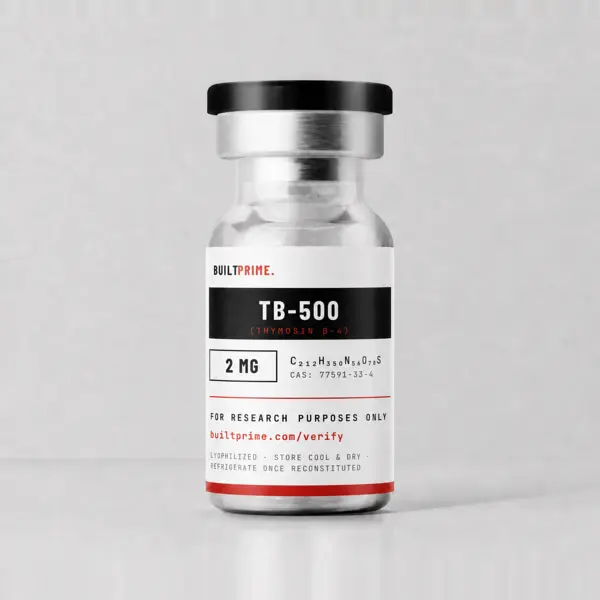
A synthetic fragment of Thymosin Beta-4 researched for its systemic anti-inflammatory and tissue repair properties across muscle, tendon, and connective tissue.
Last updated: October 2026 · Editorial Policy
TB-500 is a synthetic version of the naturally occurring 43-amino-acid peptide Thymosin Beta-4 (Tβ4). It is one of the most abundant intracellular proteins in the human body, found in nearly every tissue and cell type. TB-500 specifically replicates the active region of Tβ4 responsible for actin binding, cell migration, and anti-inflammatory signaling.
Unlike localized healing peptides such as BPC-157, TB-500 exerts systemic effects throughout the body. It upregulates actin, a cell-building protein critical for tissue repair, and promotes the migration of endothelial and keratinocyte cells to sites of injury. This makes it a subject of research interest for injuries involving muscle, tendon, ligament, and connective tissue.
Head to Head
BPC-157 vs TB-500
TB-500’s primary mechanism centers on its interaction with actin, G-actin in particular. By sequestering G-actin monomers, it promotes cell motility and migration–two processes essential for wound repair and tissue regeneration.
TB-500 is most widely studied for muscle strains, tendon injuries, and ligament damage. Its systemic distribution means it reaches injury sites throughout the body without requiring localized injection, making it a practical option for multi-site or hard-to-reach injuries.
Animal studies have shown Tβ4 promotes cardiac repair following ischemic injury, activating epicardial progenitor cells and reducing scar formation in heart tissue. This remains an active area of preclinical research.
TB-500 accelerates dermal wound closure in research models by promoting keratinocyte migration and organized collagen deposition, resulting in faster healing with reduced scarring.
Emerging research suggests Tβ4 may support neuronal survival and reduce inflammation following central nervous system injury, though human data remains limited.
TB-500’s extended half-life (~14 days) allows for less frequent dosing compared to most peptides. A common approach involves a loading phase followed by a maintenance phase.
| Protocol | Dose | Frequency | Notes |
|---|---|---|---|
| Loading Phase | 2–2.5 mg | 2x weekly | Run for 4–6 weeks to saturate tissue |
| Maintenance | 2 mg | 1x weekly | Continue 4–8 weeks after loading |
| Acute Injury | 2.5 mg | 2x weekly | Higher frequency for active recovery |
Third-party tested. Certificate of analysis available. For research use only.
Supplies: peptide vial, bacteriostatic water, insulin syringes (29–31 gauge), alcohol swabs.
Concentration: 5 mg in 2 mL = 2,500 mcg/mL
Typical research cycle: 4–8 weeks. Results generally reported within 2–3 weeks.