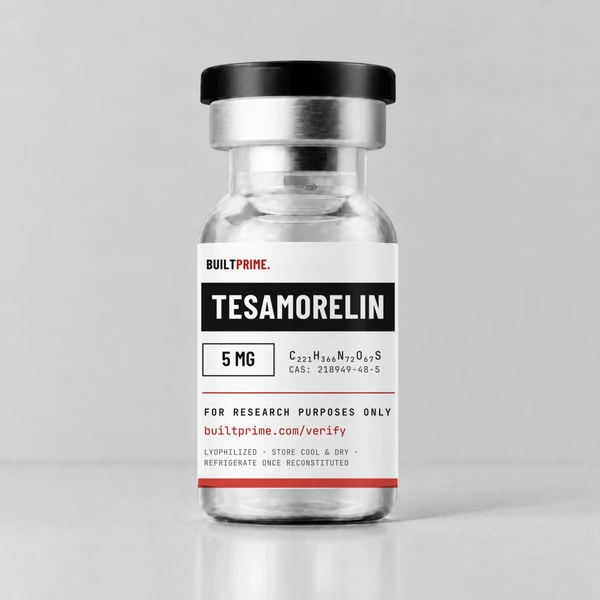
A synthetic growth hormone-releasing hormone analog that stimulates natural, pulsatile GH secretion from the anterior pituitary.
Last updated: October 2026 · Editorial Policy
Tesamorelin is a synthetic analog of growth hormone-releasing hormone (GHRH), consisting of the full 44-amino-acid GHRH sequence with a trans-3-hexenoic acid modification at the N-terminus. This modification improves stability and bioavailability compared to endogenous GHRH.
Originally developed and FDA-approved under the brand name Egrifta for the reduction of excess abdominal fat in HIV-positive patients with lipodystrophy, tesamorelin has gained significant research interest for its ability to stimulate natural growth hormone production without suppressing the hypothalamic-pituitary axis.
Tesamorelin binds to GHRH receptors on somatotroph cells in the anterior pituitary gland, stimulating the synthesis and release of endogenous growth hormone through a pulsatile, physiological pattern. Key mechanisms include:
Tesamorelin is administered daily via subcutaneous injection, typically in the morning on an empty stomach. The protocol below reflects commonly reported research dosing:
| Phase | Dose | Frequency | Notes |
|---|---|---|---|
| Weeks 1 – 2 | 1 mg | Once daily | Assessment phase |
| Weeks 3+ | 2 mg | Once daily | Standard research dose |
Inject subcutaneously in the abdomen, rotating injection sites. Administer in the morning on an empty stomach for optimal GH pulse. Typical research cycles run 8 – 12 weeks.
Supplies: peptide vial, bacteriostatic water, insulin syringes (29–31 gauge), alcohol swabs.
Concentration: 2 mg in 2 mL = 1,000 mcg/mL
Typical research cycle: 8–12 weeks. Results generally reported within 4–8 weeks.